
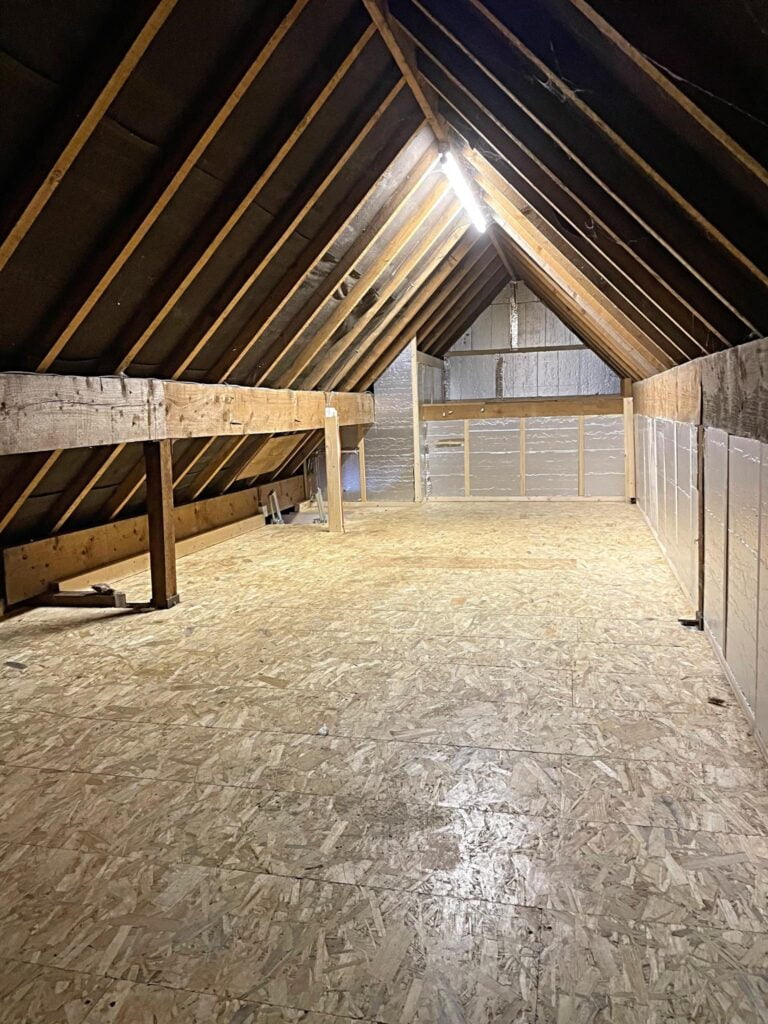
Although newer properties are built to modern standards, their loft spaces are not always designed to be used for storage straight away. The type of roof structure, the position of the joists, and the amount of available headroom can all affect how the space can be boarded. But despite this, it is usually possible to board a loft in a new-build home. In fact, with the right approach, you can make better use of the space above your home.
So, can you board a new-build loft?
Many new-build homes have lofts that are suitable for some form of boarding, particularly if you want somewhere to keep seasonal decorations, suitcases and other household belongings. However, it is important not to assume that the loft is ready to use simply because it is accessible through a hatch.
New homes often have roof structures designed specifically for the building’s intended use. Some use prefabricated roof trusses, which can limit the amount of clear space available for storage. The ceiling joists may also not be designed to support heavy loads.
A professional team can give you an honest assessment of the situation.
Why a raised loft boarding system may be needed
In many new-build properties, insulation is already installed between or above the ceiling joists. This is something to consider when planning your boarding, as the finished floor needs to accommodate the insulation without squashing it.
A raised loft boarding system creates a gap between the joists and the boards, allowing the insulation to remain at its intended depth. It can also provide a more level and usable surface for storing belongings.
The most suitable system will depend on the existing loft construction, so it’s important to choose one that works with the property’s layout rather than assuming a standard approach will suit every home.
Will boarding a new-build loft affect the roof structure?
Boarding a loft adds weight to the existing structure, and the belongings you store there add further weight. This means you should never assume that ceiling joists can support a storage floor simply because they are strong enough to support the ceiling below. As such, if you plan to store heavier items, or if you are unsure about the load the loft can safely accommodate, be sure to seek advice from a qualified professional.
What should you check before boarding a new-build loft?
Before making any changes, take time to look at the existing loft and consider how you want to use it. A little planning can help prevent unnecessary work and make the finished space more useful.
Here are some things to check:
- The roof structure: Establish whether the loft uses traditional joists or prefabricated roof trusses and whether the structure is suitable for your intended use.
- The insulation: Check where the insulation is installed and whether a raised boarding system is needed.
- Electrical cables and pipework: Make sure these remain accessible and are not damaged or covered inappropriately.
- The loft hatch: Consider whether the opening provides safe, practical access to the space.
- The available headroom: Roof slopes and trusses can limit how much of the loft is suitable for storage.
- Your storage needs: Think about whether you need a small area for occasional items or a larger boarded section for regular use.
These checks can help you decide how much of the loft to board and which features would make the space most practical.
Is professional loft boarding for new builds a good idea?
For many homeowners, hiring a professional loft boarding company is the perfect way to make better use of a new-build loft. An experienced team can assess the available space, recommend a suitable boarding system and take account of the features that make your property different from an older home.
When choosing a company, look for experience, clear pricing and an approach that considers the existing roof structure. It is also worth asking how the installation will accommodate insulation, services and access points.
A new-build loft can offer valuable extra storage when planned properly. If you’re considering boarding your loft, get in touch with a professional loft boarding team to discuss your space and find a solution that suits your home.