
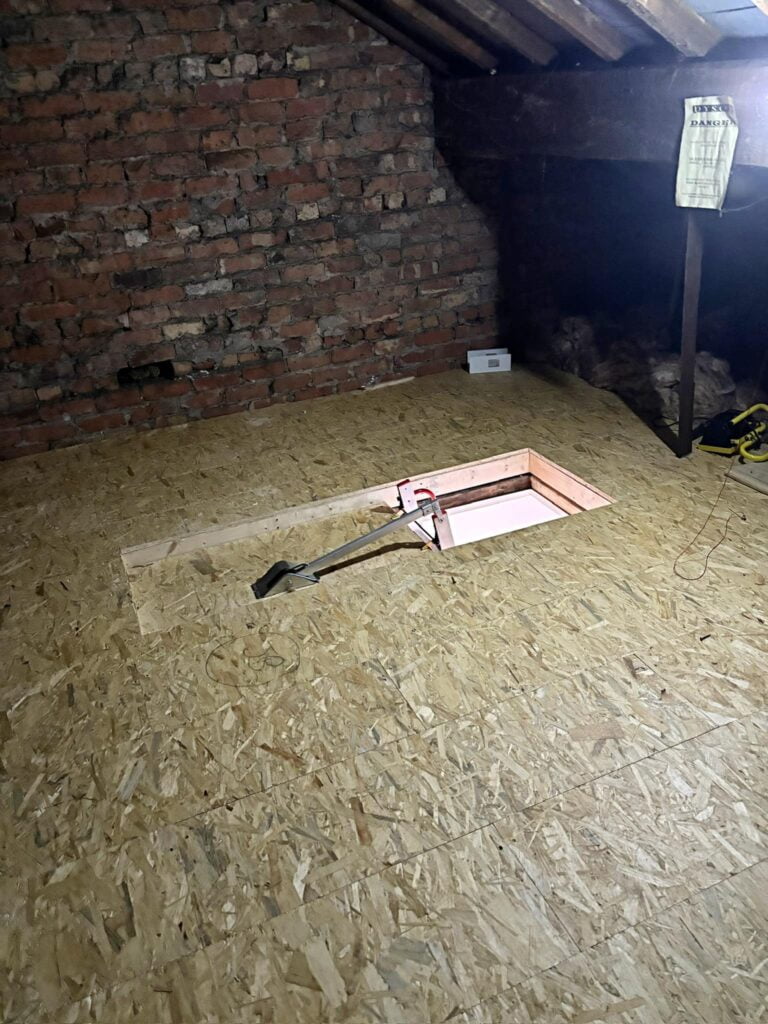
Boarding a loft can help protect and maintain the insulation already in place, but it doesn’t automatically make your home better insulated. In fact, if loft boards are installed incorrectly, they can interfere with the insulation and reduce its effectiveness. The key is how the boarding is fitted and whether there is enough space between the insulation and the finished loft floor.
Does loft boarding make a home warmer?
Loft boarding itself isn’t an insulating material, so laying boards across your loft won’t necessarily make your home warmer. However, a properly installed boarding system can help you retain the insulation that’s already there without disturbing it.
Insulation works by slowing the movement of heat through your home’s structure. When it is compressed or moved out of position, it may not perform as intended. This is particularly important in lofts where insulation sits between or above the ceiling joists.
By installing boarding at the correct height, you can create a usable storage area while allowing the insulation to remain in place beneath it.
Can loft boarding reduce insulation performance?
If the boards are installed incorrectly, it can have a negative impact on the performance of your insulation. This is just one reason why professional installation from a trusted team is so important.
One of the most common issues is laying loft boards directly onto joists when the insulation is already sitting above them. This can squash the insulation, leaving it thinner than intended. As a result, its ability to provide an effective insulating layer may be reduced.
Other problems can arise if boarding is installed without considering the existing loft layout, including:
- Compressing insulation beneath the boards.
- Moving insulation away from areas where it is needed.
- Blocking ventilation routes.
- Covering pipes, cables or other important services.
Why raised loft boarding is important
If you want to use your loft for storage without disturbing the insulation, a raised loft boarding system is often a sensible option. Rather than fixing boards directly onto the existing joists, a raised system creates additional height above them. This allows space for insulation to sit beneath the boarded floor without being compressed. The extra height also gives you a more practical storage area, making it easier to organise belongings and use the space available.
However, the appropriate height will depend on the amount of insulation already in your loft, the roof structure and the type of boarding system being installed.
Can you board a loft that already has insulation?
Many homeowners do choose to board their lofts after insulation has already been installed. The important thing is to work around what’s already there. Before boarding, it’s worth checking the insulation depth, looking for any areas that may have been moved and identifying where cables, pipes and ventilation routes are located.
A professional installer can help determine whether the existing insulation needs adjusting and whether a raised system is required to create enough clearance. This means you don’t necessarily have to choose between having insulation and having a usable loft storage space.
Does loft boarding help protect insulation?
When installed correctly, loft boarding can help keep the insulation beneath it undisturbed by providing a designated area for storage and preventing people from walking directly over the insulation.
Without a boarded surface, it’s easy to accidentally step on insulation when entering the loft, particularly if you’re moving boxes or trying to reach items stored towards the back.
How to board a loft without affecting the insulation
If you want to keep your insulation in good condition while creating extra storage, there are a few things to bear in mind:
- Use a raised boarding system where needed: Allow sufficient clearance above the insulation rather than compressing it.
- Check the existing insulation: Make sure it’s evenly distributed and hasn’t been disturbed before the boards are installed.
- Keep ventilation clear: Avoid blocking ventilation points that help maintain airflow through the loft.
- Plan around services: Electrical cables, pipework and other important features should remain accessible.
- Board only the space you need: You may not need to cover the entire loft to create useful storage.
Should you hire a professional to board your loft?
If you’re unsure how to board your loft without affecting the insulation, using a professional loft boarding company can make the process much easier.
An experienced installer can assess the existing loft, recommend an appropriate raised system and ensure the boards are fitted in a way that works with the insulation and roof structure. They can also help you decide how much of the loft to board, depending on your storage requirements.
This can be particularly useful if your loft has deep insulation, limited headroom or awkward areas that make installation more complicated.
So, does boarding a loft improve insulation?
Boarding a loft doesn’t directly improve insulation, but it can help protect the insulation you already have when installed correctly. By using a suitable raised boarding system, you can create a practical storage area without unnecessarily compressing or disturbing the insulation beneath it.
If you’re planning to board your loft, remember to:
- Avoid laying boards directly over insulation if this will compress it.
- Consider a raised boarding system to provide adequate clearance.
- Keep insulation evenly distributed beneath the boards.
- Avoid blocking ventilation or covering important services.
- Choose a boarding layout that suits your loft and storage needs.
With the right installation, you can enjoy the benefits of additional loft storage while helping to maintain the condition of your existing insulation.
If you’re looking to make better use of your loft, speak to a professional loft boarding team who can help you find the right solution for your home.